
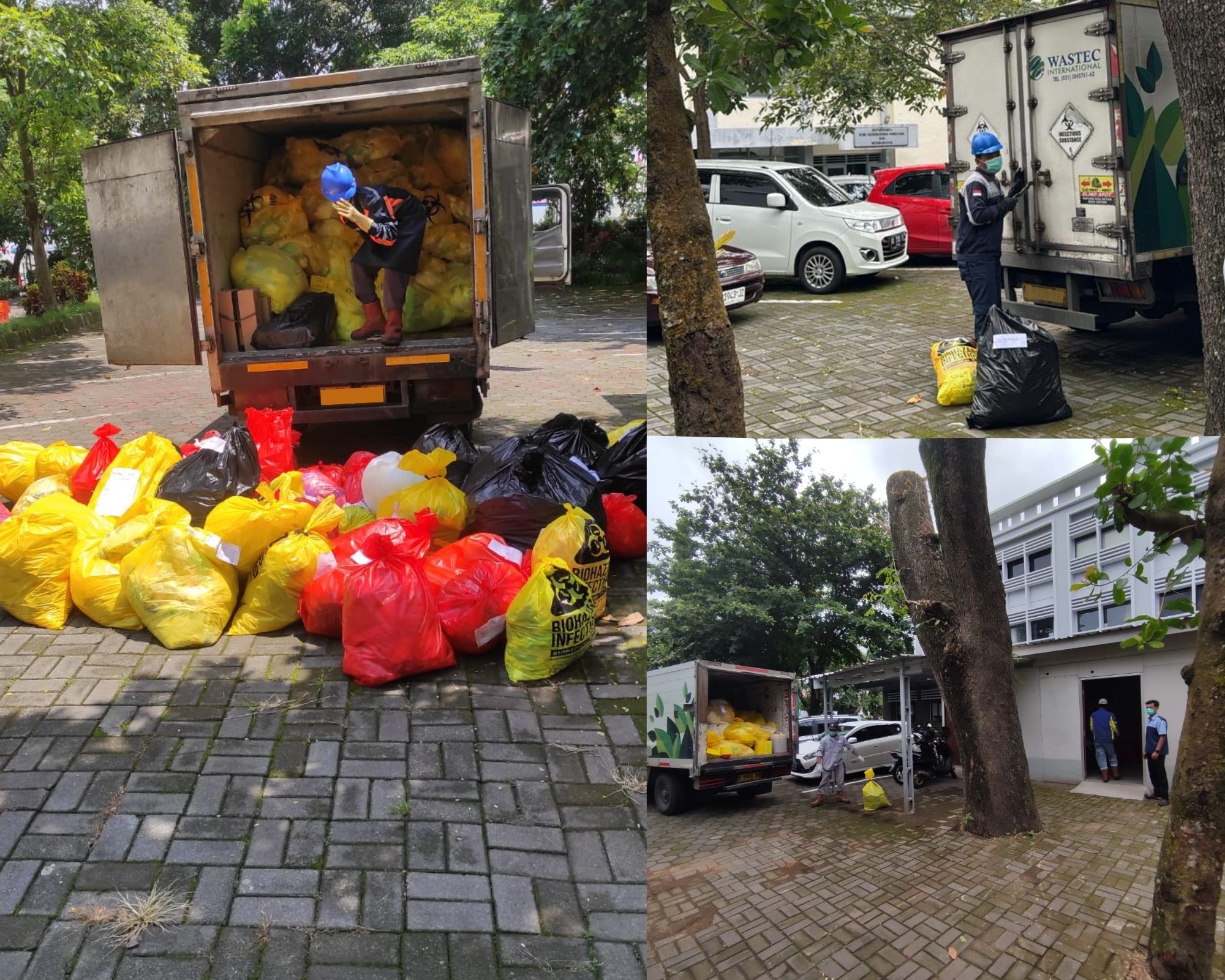
FMPHN UGM. The Faculty of Medicine, Public Health, and Nursing (FMPHN) at UGM is working to ensure that the management of hazardous and toxic waste generated from academic, research, and service activities is carried out in a structured manner to prevent negative impacts on both campus health and environment.
As an educational institution with a high volume of laboratory and health practice activities, FMPHN UGM generates hazardous and toxic waste that requires special handling. Over a two-week period, the amount of solid hazardous and toxic waste generated was recorded at approximately 50 kilograms. This waste originates from various laboratory activities, practical exercises, and the use of single-use medical supplies. Liquid hazardous and toxic waste, however, is not always generated during every period, as it depends on the type of activities currently underway.
Waste management efforts by FMPHN UGM are carried out through a process of sorting, temporary storage, and transportation in accordance with hazardous waste management procedures. These measures are implemented to minimize the risk of environmental contamination and exposure to hazardous materials for both the academic community and the surrounding community. Starting from October 2025, FMPHN UGM has been collaborating with PT Wastec International, a waste management company that holds certification and official permits from the Ministry of Environment and Forestry to manage hazardous and toxic waste.
This collaboration is one of our efforts to ensure that waste is managed in accordance with applicable safety standards and environmental regulations. In addition to focusing on technical management, FMPHN UGM also continues to raise awareness among the academic community regarding the importance of responsible waste management. Education on waste sorting, the use of personal protective equipment, and procedures for handling hazardous materials in daily activities is an important part of fostering a safe and environmentally friendly work culture.
These efforts are also aligned with the Sustainable Development Goals (SDGs). The medical waste management practices implemented by FMPHN UGM support SDG 3 on Good Health and Well-being by helping to reduce the risk of disease transmission and exposure to hazardous substances. Additionally, these measures support SDG 6 on Clean Water and Sanitation by preventing environmental pollution caused by medical waste. The practice of managing waste in a measured and responsible manner also reflects the implementation of SDG 12 on Responsible Consumption and Production.
Meanwhile, collaboration with waste management operators is part of the implementation of SDG 17 on Partnerships for the Goals to support sustainable environmental management. By strengthening the hazardous medical waste management system, the Faculty of Medicine, Public Health, and Nursing at UGM demonstrates its commitment not only to producing innovations in the field of health but also to safeguarding environmental sustainability. This step is a crucial component in creating a healthy, safe, and environmentally responsible educational ecosystem. (Writer: Alfiansari A.P., Editor: Kuni Haqiati)


